A backyard of mowing grass, a man with a shovel and an idea, and a koi pond with a 22 foot stream and waterfalls. Every hole, pipe and barrel built by hand, and written up so anyone could build their own.
380gal · small pond, 4 x 6 ft, 32 in deep
3,524gal · main pond, 14 x 16 ft, 32 in deep
165gal · 22 ft stream with waterfalls
165gal · three 55 gal filter barrels
4,234gallons of water in all
Chapter one
The story
Bill told the build as a backyard fable. Here it is in his words, with the photos he took along the way.
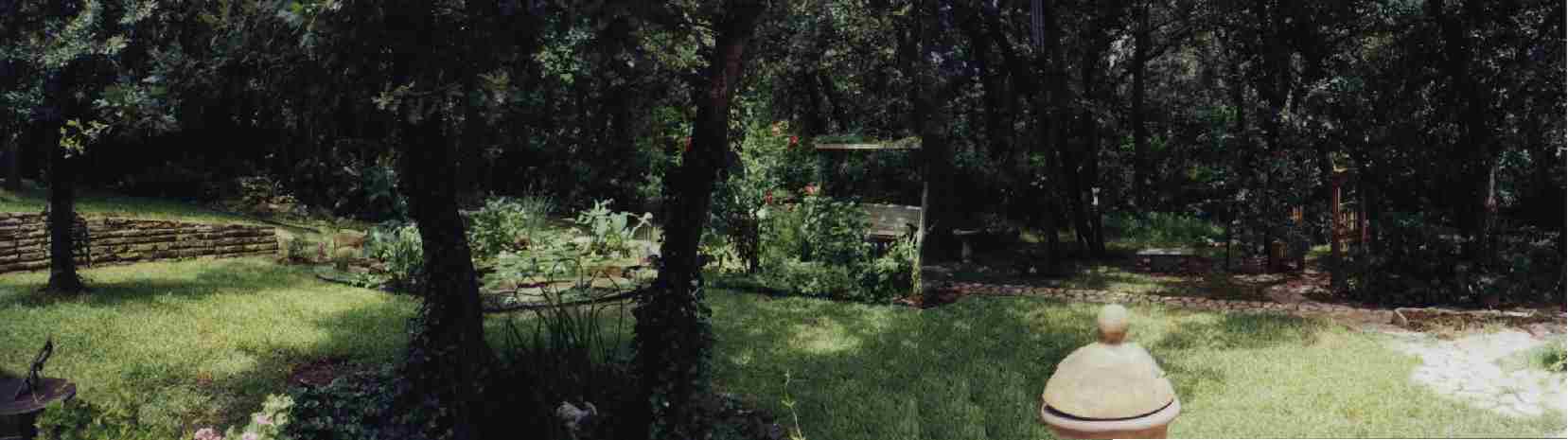
Once upon a time there was a yard. A BIG yard.
This yard was with grass. The mowing type of grass.
And this grass multiplied. And the mowing continued.
Then it came upon the caretaker this vision that perhaps the mass with less grass would be less task to mow the mass of grass.
So he began to wonder and ponder about a pond.
And he said it was good.
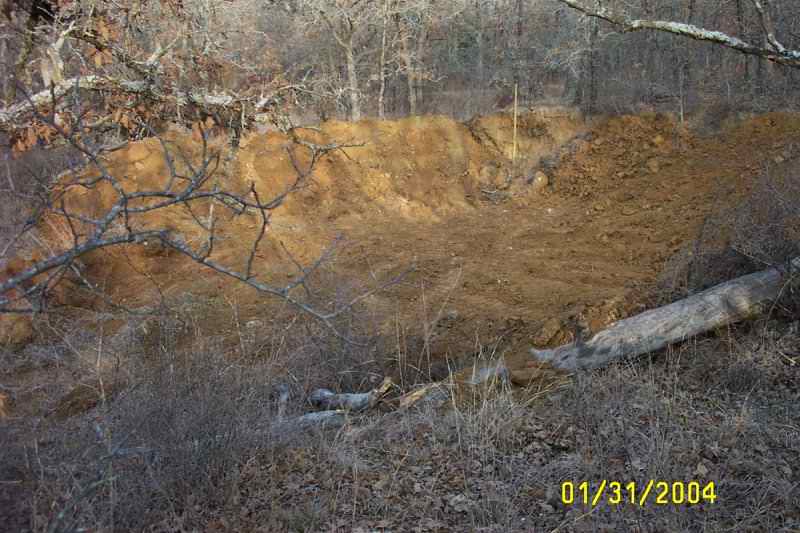
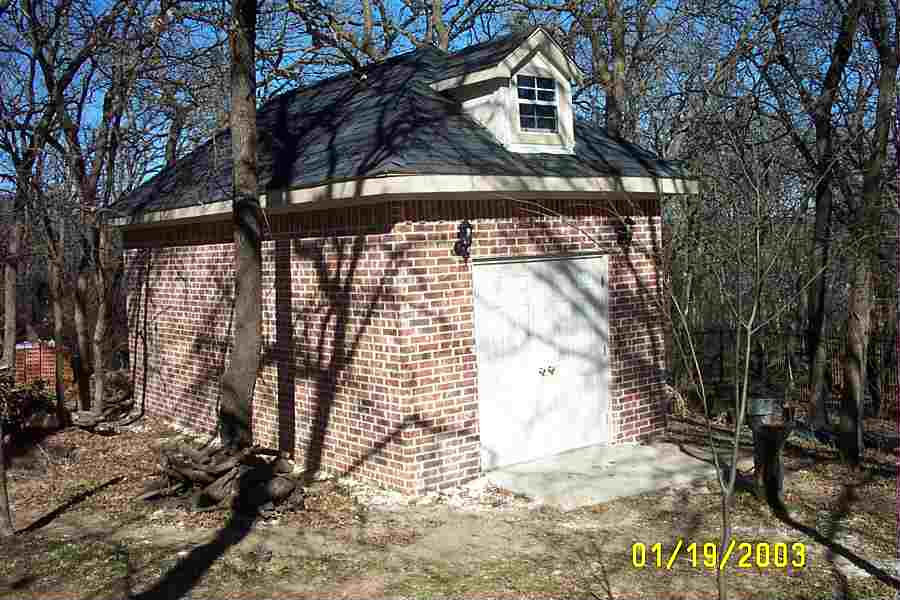
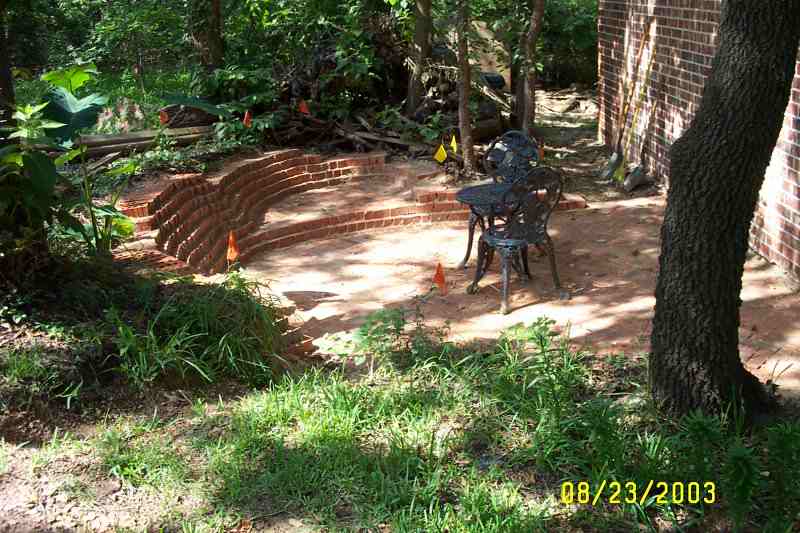
Turn this into this
But, less grass and then less dirt meant more work.
This was not so good, because less dirt meant moving the said dirt from the said hole to a hill.
He thought he was becoming ill.
And the work became more work.
Who meant for there to be cement?
And the animals were amazed at what the creator had done.
Even the 'little' hole (4 x 6, 32" deep) seemed like too much for a mole.
Now the hole had to be protected from all those rocks, and sticks, and roots, oh my!
The creator thought a good protection for the addition was to use used carpet. And the carpet guy says, "take it away, take it all".
And again he said this was good.
And the ground became rubber?
Wait, let me re-read that last line.
Yep, it is rubber all right.
Then there was water. Lots of water.
This is the small pond, and do you know a 4 x 6, 32" deep hole holds 380 gallons of water?
Take a guess at what a 14 x 16, 32" deep hole will hold.
Would you believe 3,524 gallons?
And I never mentioned the 22 foot stream with waterfalls. Add another 165 gallons.
And three 55 gallon barrels for the filter system add another 165.
4,234 gallons of water! And he said it was good.....
And it sounds and feels like a mountain stream in Colorado.... tastes like wild hickory nuts....
Ahhh... this is heaven.....
But water has a way of going down, and flowing UP hill it has a problem. How does that happen?
The creator used an idea he borrowed from a guy named Edison, who made a "shocking" discovery a loonnnggg time ago.
And it was like magic, the water just went up and flowed down, up and flowed down. The water never stopped (until the ice storm cut the power off).
An Artesian well! Wow! How did he do that?
The End. Now for how it works...
Chapter two
How it works
The technical side: plumbing, filters and pumps, most of it built from barrels, PVC and hardware store parts. Water runs skimmer, vortex, bio-filter, trickle tower, then back down the stream.
Step 1 · Skimmer
The skimmer
Water flows into the skimmer, where a net across two thirds of the barrel catches leaves, sticks and anything else floating. An orange float works like the one in a toilet tank: it is tied to the irrigation well line and keeps the pond at a constant level. Well water means no chlorine to deal with. A bottom drain flushes out whatever the net misses, and a 3 in PVC line carries water on to the vortex filter.
Step 2 · Settling
The vortex filter
Gravity feeds water from the pond through a 3 in 45 degree elbow that sets it spinning. Heavy material settles to the bottom, and clean water exits through the center standpipe. A capped cross piece at the bottom makes the legs. Bill made the cone from linoleum and rivets.
Step 3 · Pumps
The pump house
1,800 GPH
Mag pump lifts water from the vortex up to the bio-filter. With the head, it delivers about 1,000 GPH.
4,116 GPH
External Wave pump with priming pot and leaf trap moves water from the skimmer to the small pond, feeding the falls and stream. A check valve in the skimmer holds its prime.
One master switch in the pump box cuts both pumps, and the whole circuit runs on a GFI breaker at the house.
Step 4 · Biology
Bio-filter and trickle tower
The bio-filter is bottom fed: water enters low and exits high, through about 1,300 feet of plastic strapping that gives bacteria room to grow. The trickle tower is top fed through a spray bar and holds 6 bags of rinsed lava rock kept out of the water, an oxygen rich home for the bacteria that clear ammonia and nitrites. In Bill's words, he would not have a pond without one: gin clear water all the time, no more pea soup.
A plastic grate sits about 8 in off the bottom of each barrel so the media never plugs the inlet or the drain.
Every pond · Drain
The bottom drain
Each pond has a bottom drain made from a pair of toilet flange seal rings and rubber wax rings, with 2 extra brass bolts for a better seal. A 3 in hole was cut in the liner and clamped between them, so fish waste and gunk can be flushed out. Topping it off: an upside down dark cereal bowl.